Master Your Minutes: A Guide to the Meeting Note Canva Template
More Than Just a Document: The Visual Language of Your Notes
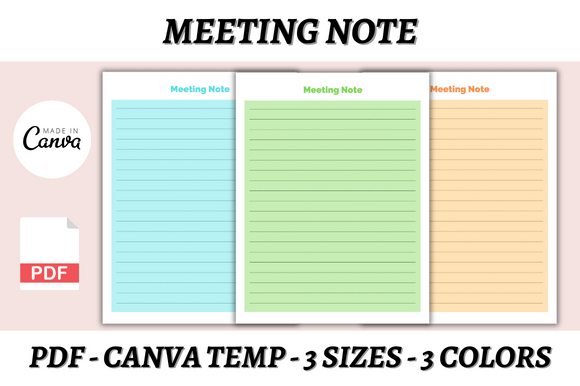
In the world of professional communication, clarity is currency. A well-structured meeting note isn't just a record; it's a tool for accountability, a catalyst for action, and a reflection of your organizational skills. The Meeting Note Canva Template is designed with this philosophy at its core. It moves beyond a simple, blank page, offering a visually coherent and strategically organized framework. The aesthetic is one of clean, modern minimalism—think generous white space, a clear typographic hierarchy, and subtle use of color blocking to guide the eye. This isn't about decorative flourishes; it's about functional design that reduces cognitive load, making it easier for anyone to find key decisions, action items, and deadlines at a glance. The overall appeal lies in its professional polish, which instantly elevates the perceived value of the information it contains.
Strategic Applications: Where This Template Shines
The true power of a well-designed template is its versatility. This Meeting Note Canva Template is a flexible asset that adapts to numerous professional contexts, saving you significant time while ensuring consistency.
For brand identity and internal communications, using a consistent template for all meeting notes reinforces a company's commitment to organization and professionalism. It becomes a subtle yet powerful element of your operational brand. Entrepreneurs and small business owners will find it invaluable for documenting client consultations, project kickoffs, and investor meetings, where a polished record can build trust and credibility.
Marketers and content creators can leverage it to outline campaign brainstorming sessions, editorial calendar meetings, or collaboration briefs. The structured format helps translate creative ideas into actionable tasks. For those in publishing or managing digital products, like an Etsy or Shopify store, it's perfect for documenting supplier negotiations, product development discussions, or customer feedback reviews. The template’s structure ensures nothing falls through the cracks.
Beyond the corporate sphere, its utility extends to community groups, freelance collaborations, or even personal project planning. The ability to edit it in a free Canva account means you can tailor it for a non-profit board meeting just as easily as for a casual mastermind group. The included PDF formats (A4, A5, US Letter) make it ready for both digital distribution and physical printing, ensuring your notes look impeccable in any medium.
Practical Guidance for Effective Use
Getting the most out of this asset involves a few simple, practical steps. First, consider the font pairing and color scheme within the template. While it comes with three color options, you should immediately customize it with your own brand colors and logo. This transforms it from a generic tool into a seamless extension of your brand identity. The Canva editor allows you to change fonts, sizes, and layout styles, so you can adjust the typography to match your company's style guide—perhaps swapping a sans serif font for a serif font if it better suits your brand's personality.
Evaluate the template's fit for your specific needs. Does the layout for action items and decisions work for your team's workflow? Test it in a real meeting. The goal is to create a design asset that people actually use because it makes their work easier, not harder. Think about readability above all. The clean layout is designed for it, but ensure your color choices maintain strong contrast for clear on-screen and print legibility.
Finally, understand the commercial potential. This isn't just a personal productivity tool. As a customizable Canva template, it's a foundational asset for your own product line. You can modify the design, incorporate your unique style, and sell the resulting template on your website or marketplaces. This represents a practical application of modern digital entrepreneurship—taking a professionally designed base and adding your creative value to serve a specific audience. It’s a tangible example of how good design thinking, packaged correctly, can become a scalable offering.