Create a Polished Client Onboarding Experience
First impressions in business aren't just about the handshake anymore; they are about the ecosystem you build around your service. When a client signs a contract or makes a payment, that moment of excitement is fragile. If the next step is silence or a confusing email chain, doubt creeps in. This is why a structured New Client Welcome Packet is one of the most powerful tools in a creative professional's arsenal. It bridges the gap between a signed proposal and the start of actual work, establishing a tone of competence and care before the project even begins.
Visual Identity and Modern Aesthetics
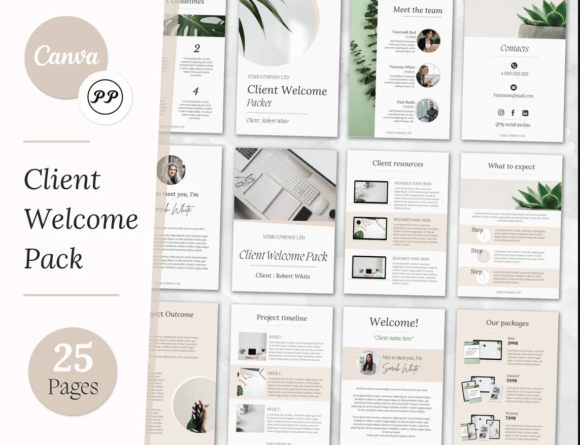
A welcome packet is more than a collection of documents; it is a reflection of your brand identity. The template pack we are discussing here is designed with modern typography and clean layouts that avoid clutter. It moves away from the dense, text-heavy contracts of the past, utilizing white space and visual hierarchy to guide the reader’s eye. The aesthetic is professional yet approachable, balancing the seriousness of legal terms and timelines with the warmth of a personal introduction. This visual consistency tells the client, "We pay attention to details," which is a promise that you will pay attention to the details of their project, too.
The design relies on a harmonious blend of sans serif font choices for readability and serif font accents for headers, creating a balanced typographic rhythm. This isn't just about looking good; it’s about function. Good design assets reduce cognitive load. When a client opens your packet, they shouldn't have to hunt for the payment schedule or the project timeline. The layout ensures that critical information is accessible, using visual cues to separate sections like "Project Guidelines" from "Client Resources."
Practicality Meets Professionalism
For entrepreneurs and small business owners, time is the most valuable currency. A common pitfall is starting from scratch with every new client, leading to inconsistencies and wasted hours. By using a standardized template, you ensure that every client receives the same high-quality experience. This premium font usage and structured layout contribute to a perception of high value. It signals that you are established and organized, which allows you to command higher rates and fosters deeper client engagement.
The packet covers the entire client journey. It starts with the "About Us" and "Meet the Team" sections, humanizing your brand. It moves into "Our Services" and "What to Expect," which manages expectations—a crucial step in preventing scope creep and misunderstandings later. The inclusion of a "Project Timeline" and "Project Outcome" sections helps visualize the path forward, while the "FAQ" addresses common hesitations before they become support tickets. This is practical editorial design applied to business operations.
Adaptability Across Industries
While this specific packet is tailored for coaches, the underlying structure is universal. Whether you are a graphic designer offering logo design services, a photographer handling wedding bookings, or a marketing consultant launching a new campaign, the skeleton remains the same. The template allows for easy customization, meaning you can adapt the visual style to fit a corporate client or a bohemian creative just by swapping out images and adjusting the color palette.
The versatility extends to the content delivery. Because these templates are designed for digital editing, they work seamlessly for web design PDFs or downloadable resources on your site. They can even inform your social media graphics if you choose to pull quotes or key points to share publicly. The ability to edit these documents easily means you can maintain brand consistency across all touchpoints, from the initial proposal to the final invoice.
Streamlining the Business Side
Business often feels like a balance between creativity and administration. This packet leans heavily into the administrative side to free up your creative energy. By clearly defining "Billing Terms," "Payment and Cancellation" policies, and "Terms and Conditions," you create a safety net for your business. It removes the awkwardness of discussing money or boundaries in the moment because the rules were established upfront in a professional document.
The "Invoice" section is particularly useful for service providers who need to standardize their billing. Instead of sending a generic PayPal link or a hastily typed email, you are presenting a cohesive package. This approach to packaging design for your services makes the transaction feel more substantial. It transforms a simple financial exchange into a professional relationship, reinforcing that the client is investing in a structured service, not just buying time.
Implementation and Workflow
Setting up your welcome packet is designed to be a low-friction process. The system relies on accessible tools like Canva, meaning you do not need advanced design software or technical skills to make it your own. Once you download the files, the editing process is intuitive. You can update your team photos, tweak the copy to match your voice, and ensure your contact information is correct. Once finalized, the PDF format ensures that the layout looks exactly the same on every device, whether the client opens it on a laptop or a smartphone.
Ultimately, a New Client Welcome Packet is about control—control over your brand narrative, your client's experience, and your project's success. It is an investment in your business infrastructure that pays dividends in client trust and operational efficiency. By presenting a polished, well-organized front, you set the stage for a successful collaboration and a lasting professional reputation.